← Back to Blog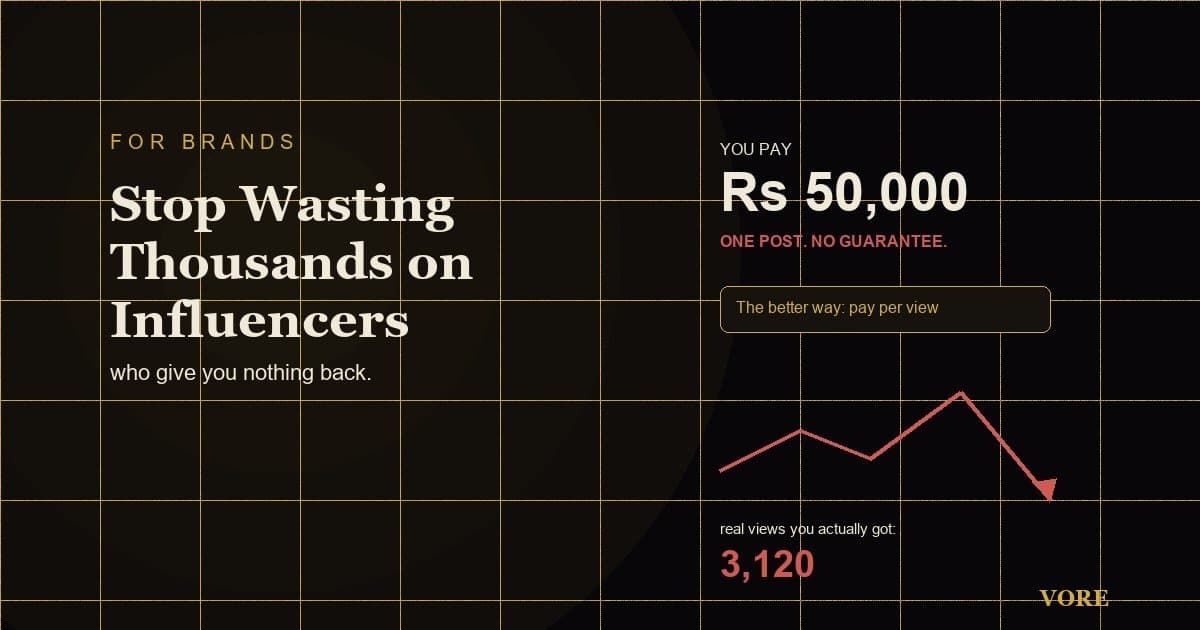
August 25, 2026
Why Marketing Budgets Are Quietly Moving From Ads to Clipping
There is a shift happening in marketing budgets right now that most brands in India have not noticed yet.
For the last decade, the default answer to "we need more reach" was to buy it. Run Meta ads. Run Google ads. Pay for impressions. The problem is that impressions have been getting steadily more expensive while getting steadily less effective. CPMs on paid social have inflated year after year, and the people you reach are increasingly skilled at scrolling past anything that looks like an advertisement.
So brands started looking for something else, and what they found was clipping.
What clipping actually is
A brand has content. A podcast episode, a founder interview, a product launch video, a livestream. That content is good, but it is long, and long content does not travel.
In a clipping campaign, the brand puts up a budget and sets a rate per thousand views. Independent creators, called clippers, cut short clips from that content and post them to their own accounts. The brand pays for the views those clips actually deliver.
The important word is "actually". You are not buying impressions that may or may not be watched. You are not paying a flat fee to a creator and hoping the post performs. You pay for views that happened.
Why marketers are paying attention
Three things make this interesting for a brand.
The first is cost. Clipping campaigns run at an effective cost per thousand views far below what a single influencer post costs for equivalent reach. When you pay one creator a flat fee, you are buying one attempt at a hook. When you run a clipping campaign, dozens of creators try different cuts of the same content, and you pay for the ones that work.
The second is that it is a testing system as much as a distribution system. Every clipper picks a different moment, writes a different hook, cuts it differently. Within a week you learn which thirty seconds of your ninety minute podcast people actually care about. That is market research you would otherwise pay an agency for.
The third is that the content lands as content. It arrives on someone's feed inside a creator's own voice and audience, not as a sponsored unit people have trained themselves to ignore.
Which brands this suits
Clipping works best when you already have long form content or are willing to make it. Podcasts, interviews, webinars, launches, founder content, gaming streams, music.
Categories with the most room to grow right now are the ones that have been slowest to move: finance, healthcare, legal services, education. These are industries where trust matters and where a long explanation is the product, which is exactly the kind of content that clips well.
The catch nobody mentions
Paying per view invites fraud. If you pay for views, someone will try to manufacture views, or submit a clip of someone else's video, or claim a video that already had a million views before your campaign started.
This is the part of clipping that is easy to promise and hard to run, and it is why the verification layer matters more than the marketplace itself. Before you run a campaign anywhere, ask how channel ownership is verified, whether view counts are read from official platform APIs or from screenshots, and what happens when a platform removes fake engagement after a payout has been made.
Where this goes
Clipping is not going to replace paid advertising. It is going to take the share of budget that was being spent on reach rather than on targeting, which is a large share.
Brands that move early get the same advantage early Instagram advertisers got: lower costs, less competition for creator attention, and a head start on learning what works. Vore runs performance based clipping campaigns in India, with budgets in rupees, payouts to UPI, and verification built in from the start.