← Back to Blog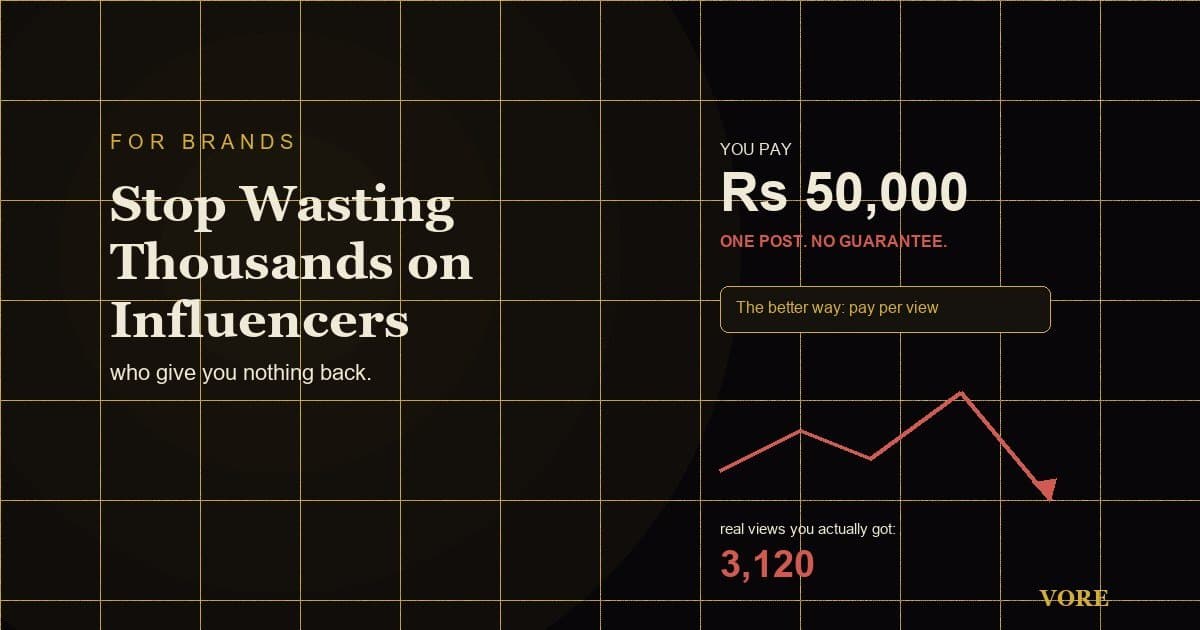
July 12, 2026
How Brands Are Wasting Thousands on Influencers Who Give Them Nothing Back
Every brand that's run an influencer campaign in India has felt this, even if they haven't said it out loud: you paid ₹30,000, ₹50,000, sometimes lakhs, for one post — and you have no real idea if it did anything.
That feeling isn't paranoia. It's the model working exactly as designed — against you.
Here's how the money actually leaks.
You pay a flat fee, no matter what happens. The influencer charges the same whether their post gets 2,000 views or 200,000. All the performance risk sits on you, the brand. They get paid on delivery; you get paid in "hope it works." No other form of marketing would let you accept that deal, yet influencer marketing normalized it.
You're paying for followers, not viewers. A creator's follower count is the most inflated, easily-faked number in marketing. Bought followers, dead accounts, engagement pods — a 200,000-follower creator can routinely get 3,000 real views. You paid for the follower number on their media kit. You got a fraction of it in actual eyeballs.
You get one post, then it's over. That ₹50,000 buys a single piece of content that lives for 48 hours and disappears. No compounding, no volume, no second chance if it flops. One shot, full price.
And then there's the ghosting. Anyone who's run these campaigns knows the routine — chasing creators for deliverables, late posts, missed briefs, content that doesn't match what was agreed. You're not just paying a premium; you're paying to project-manage someone who's already been paid.
Add it up and the average influencer deal is: high upfront cost, unknown reach, no performance guarantee, no volume, and an admin headache. For a brand watching its budget — especially a small or growing one — it's one of the least accountable ways to spend a marketing rupee that exists.
Now compare it to how it should work.
Imagine you only paid for views that actually happened. You set a budget and a rate — say ₹75 per 1,000 views. You upload your content. Instead of one creator, dozens of clippers cut and post it across their accounts at the same time. Views get tracked automatically. You pay per real view, and not a rupee more. If a clip flops, you simply haven't spent that part of the budget yet. If it takes off, you got reach at a fraction of what one influencer post would've cost.
No upfront gamble. No fake-follower tax. No ghosting — because clippers only earn when their content actually performs, so their incentive is finally aligned with yours. No one-and-done — you get volume, spread across many creators and many clips.
This isn't a rejection of every influencer partnership; big-name creators still matter when brand storytelling is the goal. But for the everyday job of getting your content seen by real people — testing whether short-form even works for you, getting reach without lighting money on fire — the flat-fee influencer model is simply the wrong tool, and more brands are realizing it every month.
That's exactly what Vore is built for: performance-based clipping, where brands set a budget, creators clip and post, views are tracked automatically, and you only pay for real results. If you're a brand tired of paying upfront and hoping, join the waitlist — early access is opening soon, and the first brands in each category get the best creators.